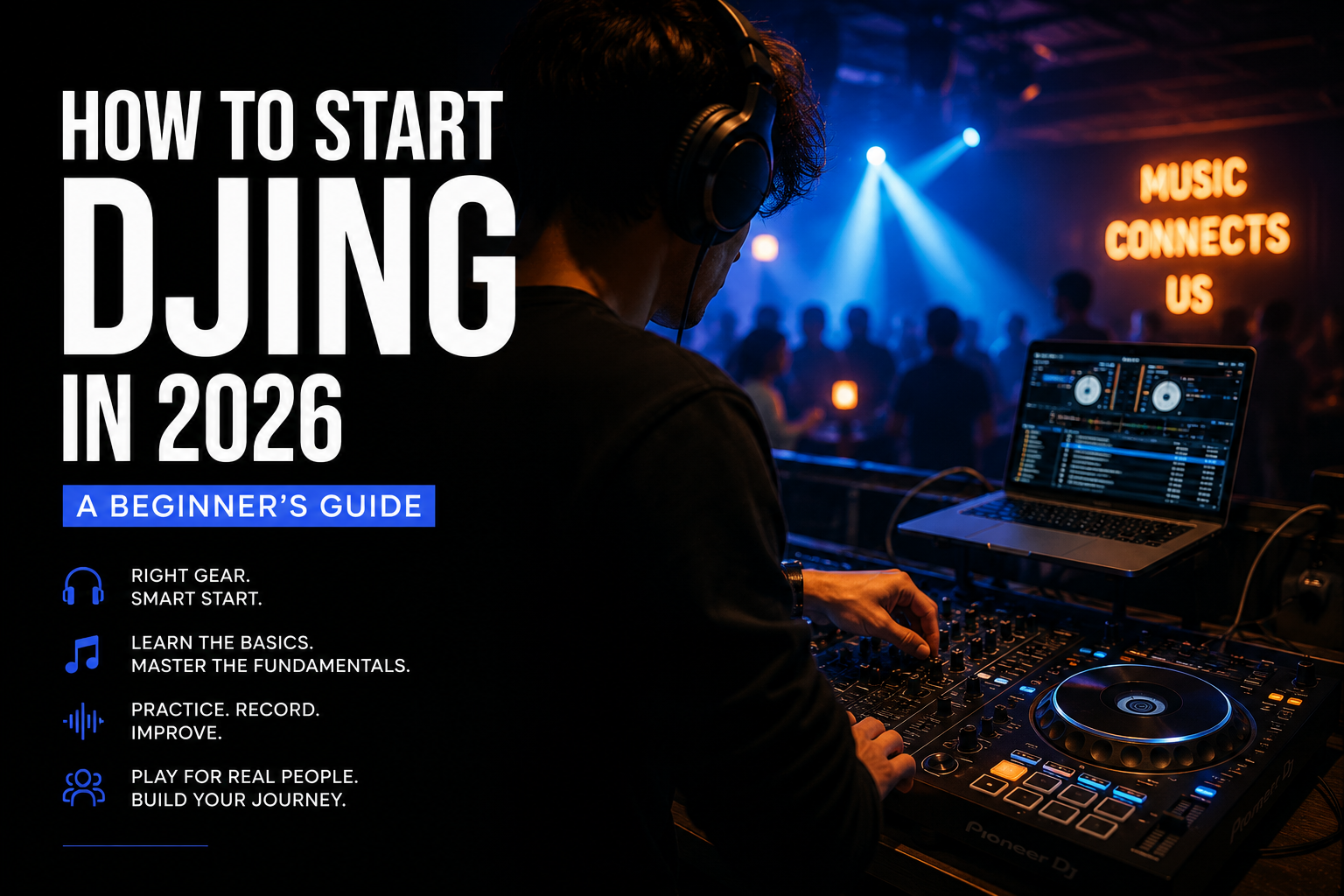
Everyone starts somewhere. Every headliner you’ve watched on stage once stood in their bedroom wondering which button to press first. The good news? In 2026, becoming a DJ is more accessible than ever. You don’t need a massive studio or thousands of dollars’ worth of equipment—you just need curiosity, consistency, and a genuine love for music.
Whether your dream is to play intimate cafés, underground clubs, music festivals, or simply create mixes for YouTube, this guide will help you take your first steps into the world of DJing.
Why More People Are Becoming DJs
The electronic music scene has grown beyond nightclubs. Today, DJs perform at rooftop parties, restaurants, coffee shops, fashion events, weddings, community gatherings, and livestreams. Platforms like YouTube, SoundCloud, Instagram, and TikTok have made it possible to build an audience without waiting for club bookings.
More importantly, DJing has become a form of creative expression. It’s about telling a story through music, introducing people to new sounds, and creating memorable experiences.
Step 1: Understand What a DJ Actually Does
Many beginners assume DJing is simply pressing play on songs.
In reality, a great DJ does much more:
- Curates music that fits the mood.
- Blends tracks seamlessly.
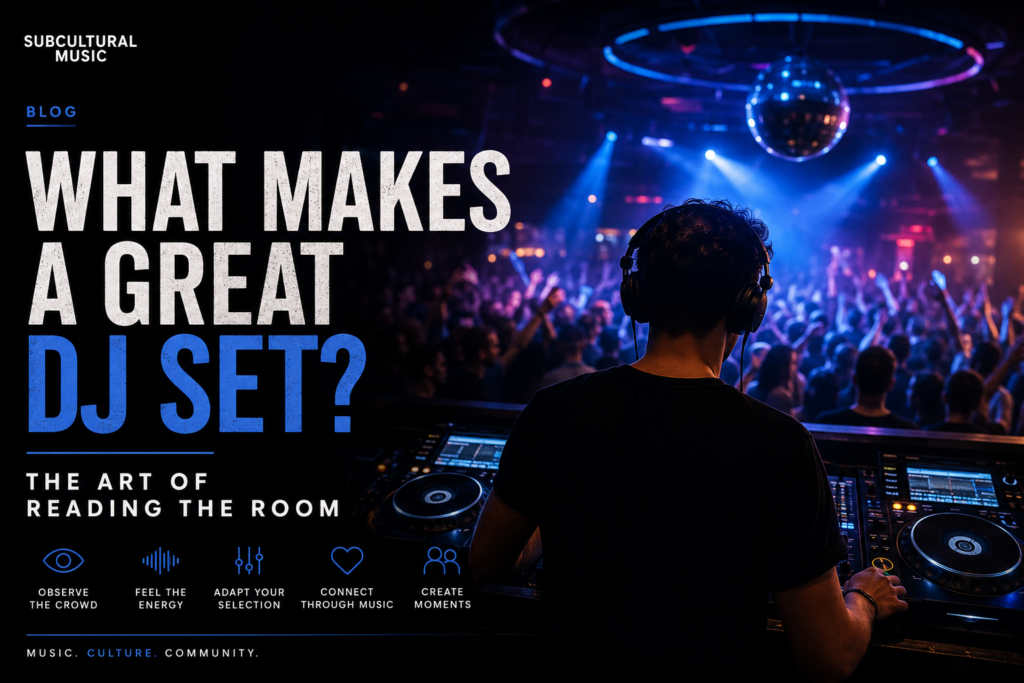
- Controls the energy of a crowd.
- Reads the room and adapts.
- Creates a musical journey from start to finish.
Technical skills matter, but your taste in music is what truly sets you apart.
Step 2: Choose Your Music Style
One of the biggest mistakes beginners make is trying to play every genre.
Instead, start with music you genuinely enjoy.
Some popular electronic genres include:
- House
- Deep House
- Tech House
- Melodic House
- Techno
- Afro House
- Disco
- UK Garage
- Breaks
- Drum & Bass
- Minimal
- Progressive House
As your skills improve, you’ll naturally become comfortable mixing multiple styles.
Step 3: Buy the Right DJ Equipment
You don’t need professional club gear on day one.
A beginner setup usually includes:
DJ Controller
A controller combines two virtual decks with a mixer and connects directly to your laptop.
Popular beginner options include:
- Pioneer DDJ-FLX4
- AlphaTheta DDJ-FLX2
- Hercules Inpulse 500
- Numark Mixtrack Platinum FX
Laptop
A reliable laptop with at least:
- 16GB RAM
- SSD storage
- Modern processor
is more than enough for beginner DJ software.
Headphones
Invest in closed-back DJ headphones with good isolation so you can cue tracks accurately.
Speakers
Studio monitors are great for practicing at home, but even quality bookshelf speakers are enough when you’re just getting started.
Step 4: Learn DJ Software
Your controller works with DJ software that manages your music library and mixing tools.
Popular options include:
Most beginner controllers include free software licenses, making it easy to start practicing immediately.
Step 5: Build Your Music Library
Your music collection is your identity as a DJ.
Avoid downloading low-quality MP3 files from random websites.
Instead, purchase or stream high-quality tracks through trusted platforms like:
- Beatport
- Bandcamp
- Traxsource
- SoundCloud (official downloads)
- Apple Music (for personal listening)
- Spotify (for discovering music)
Organize your library by:
- Genre
- BPM
- Energy level
- Mood
- Key
A well-organized library makes live performances much smoother.
Step 6: Learn the Fundamentals of Mixing
Before worrying about advanced tricks, focus on mastering the basics.
Learn how to:
- Beatmatch tracks.
- Count musical phrases.
- Use EQ effectively.
- Mix intros and outros.
- Transition smoothly.
- Control volume levels.
- Use loops.
- Set cue points.
The cleaner your transitions, the more professional your sets will sound.
Step 7: Practice Consistently
There’s no shortcut to becoming a confident DJ.
Aim for at least 30–60 minutes of practice several times a week.
Focus on:
- One genre at a time.
- Smooth transitions.
- Recording your mixes.
- Listening back critically.
Every recorded session teaches you something new.
Step 8: Record Your First Mix
Once you’re comfortable mixing several tracks together, record a full set.
Keep it simple:
- 30–60 minutes long.
- High-quality audio.
- Smooth transitions.
- Clear musical direction.
Don’t worry about perfection. Every DJ improves with each recording.
Step 9: Create Your Online Presence
Your online profile is often your first impression.
Create accounts on:
- YouTube
- SoundCloud
- Mixcloud
Share:
- Practice sessions
- Short clips
- Recorded mixes
- Behind-the-scenes moments
- Music recommendations
Consistency is more important than chasing viral content.
Step 10: Start Playing for Real People
Your first audience doesn’t need to be hundreds of people.
Play for:
- Friends
- House parties
- Community gatherings
- Local cafés
- Small venues
- Open-deck nights
Every performance builds confidence and teaches you how to connect with listeners.
Common Beginner Mistakes
Avoid these common pitfalls:
- Buying expensive equipment too early.
- Focusing on effects instead of clean mixing.
- Playing music you don’t actually enjoy.
- Ignoring music theory and phrasing.
- Comparing yourself to experienced DJs.
- Downloading poor-quality audio files.
- Not recording your practice sessions.
Remember, every professional DJ once made these same mistakes.
DJing Is About More Than Technology
While equipment and software continue to evolve, the heart of DJing remains unchanged.
People remember how your set made them feel—not how many effects you used or how complicated your transitions were.
The best DJs know how to create moments, surprise audiences, and tell stories through music.
That comes from passion, patience, and years of listening.
Final Thoughts
Starting your DJ journey in 2026 has never been easier. The tools are more accessible, the learning resources are endless, and the opportunities to share your music are everywhere.
Don’t wait until you have the “perfect” setup or feel completely ready. Start with the equipment you can afford, practice regularly, explore new music, and keep improving one mix at a time.
At Subcultural Music, we believe every great artist starts with a single track. Whether you’re taking your first steps behind the decks or preparing for your first live performance, the most important thing is to keep playing, keep learning, and stay true to your sound.
Your first mix won’t be your best—but it could be the beginning of something unforgettable.
Frequently Asked Questions
Do I need expensive equipment to start DJing?
No. A beginner controller, a laptop, and a good pair of headphones are enough to learn the fundamentals and record your first mixes.
Which DJ software is best for beginners?
rekordbox and Serato DJ are excellent starting points because they’re widely used and compatible with many entry-level controllers.
How long does it take to learn DJing?
Most beginners can learn basic mixing within a few months of regular practice. Becoming a confident performer takes consistent experience and time.
Can I become a DJ without playing in clubs?
Absolutely. Many DJs build audiences through YouTube, SoundCloud, livestreams, private events, cafés, and community-driven music platforms.
Where can I find opportunities to perform?
Look for open-deck nights, local community events, independent venues, music collectives, and platforms that support emerging artists. Building relationships within your local music scene often leads to your first gigs.