House music is the heartbeat of club culture: a steady four-on-the-floor kick, a warm bassline and a groove that makes a whole room move together. At Subcultural Music, where everything is built By The DJs, For The DJs, it is the sound many of us first learned to dance and mix to. This guide explains what house music is, where it came from, how it sounds and which artists to hear first.

What Is House Music?
House music is a style of electronic dance music built around a four-on-the-floor beat, which simply means a kick drum on every beat of the bar. Tempos usually sit between roughly 118 and 130 BPM, fast enough to dance to and relaxed enough to carry a room for hours. On top of that steady pulse sit hi-hats, claps, rolling basslines, chords, samples and, very often, soulful vocals.
Where House Music Came From
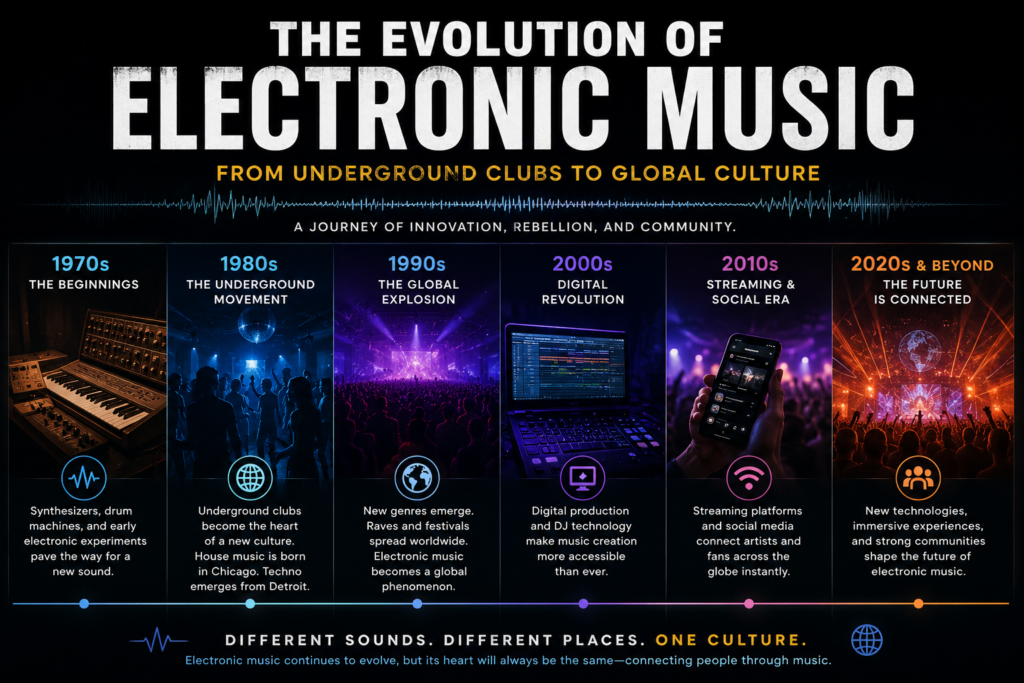
House was born in Chicago in the early 1980s. As disco faded from the mainstream, DJs in the city’s clubs kept the dance floor going by extending records, adding drum machines and reworking tracks to be longer, deeper and more hypnotic. The name is widely said to come from the Warehouse, the Chicago club where DJ Frankie Knuckles played, with records from the scene soon labelled as “house” music.
From Chicago the sound travelled to New York, Detroit and the United Kingdom, and then across Europe and the rest of the world. Today it is one of the most widely played styles in clubs and festivals, and the foundation for dozens of subgenres. You can read more about the history of the genre on Wikipedia.
What Does House Music Sound Like?
If you want to recognise house when you hear it, listen for these ingredients:
- A four-on-the-floor kick: one steady kick on every beat that you can nod along to.
- Off-beat hi-hats: open hi-hats that sit between the kicks and give the groove its bounce.
- A warm, rolling bassline: often the main hook of the track.
- Chords and stabs: piano, organ and synth chords with roots in soul, gospel and disco.
- Vocals and samples: from full diva vocals to short repeated phrases.
- DJ-friendly structure: long intros and outros that make tracks easy to mix together.
That last point matters. House was made on the dance floor and for the dance floor, which is why its structure suits DJs so well. If you are new to hearing the layers in a track, our guide on how to listen to electronic music beyond the drop is a good companion.
Popular House Music Subgenres
House is a big family. Deep house leans warm and mellow, tech house is tighter and more percussive, progressive house builds slowly over long journeys, Afro house brings in African rhythms and percussion, and acid house is built on the squelchy sound of the Roland TB-303. There are many more, and we are covering them one by one in this Explained series.
5 Essential House Music Artists
These five names shaped the sound and are an excellent place to start:
- Frankie Knuckles: often called the Godfather of House, and the resident DJ at the Warehouse in Chicago.
- Larry Heard: also known as Mr. Fingers, a pioneer of the deep, emotional side of house.
- Marshall Jefferson: a Chicago producer behind some of the earliest house anthems, including “Move Your Body”.
- Ron Hardy: the DJ at Chicago’s Music Box, known for raw, high-energy sets and his own edits.
- Kerri Chandler: a New Jersey producer whose soulful, deep records have influenced generations of DJs.
How to Start Listening to House Music
Pick one classic and one modern track and listen to each a few times. First follow only the kick and the bassline, then the hi-hats, then the vocals or chords. You will start to hear how the groove is built layer by layer. Then listen to a full DJ mix and notice how one track slides into the next without breaking the rhythm.
Hear House Music With Subcultural Music
Reading about a genre is one thing, and feeling it in a room is another. Subcultural Music is a community for DJs, producers, listeners and electronic music lovers, and its flagship, The Island, brings together live events, broadcasts, merchandise and community. Whether you DJ, produce or simply love electronic music, you are part of this community and always welcome. If you prefer a more social night out, take a look at Strangers In A Room.
Frequently Asked Questions
What is house music?
House music is a style of electronic dance music built on a four-on-the-floor kick drum, usually between 118 and 130 BPM, with basslines, chords, samples and often soulful vocals.
Where did house music originate?
House music began in Chicago in the early 1980s, growing out of disco and the DJs who extended and reworked records with drum machines. It then spread to New York, Detroit, the UK and the rest of the world.
What BPM is house music?
Most house music sits between about 118 and 130 BPM. Deeper styles tend to be at the slower end and more energetic styles such as tech house tend to be a little faster.
What is the difference between house and techno?
House is usually warmer and more soulful, with chords, vocals and a bouncy groove, while techno is typically darker, more mechanical and more focused on rhythm and texture. Both use a steady kick, but they feel different on the dance floor.
Is house music good for beginner DJs?
Yes. The steady four-on-the-floor beat and long intros and outros make house one of the easiest styles to learn beatmatching and mixing on.
What is Subcultural Music?
Subcultural Music is an electronic music community for DJs, producers, listeners and electronic music lovers, built on the idea of By The DJs, For The DJs. Its flagship, The Island, brings together live events, broadcasts, merchandise and community.
Keep Listening
House music has been getting people onto the dance floor for more than forty years, and it is still evolving. Start with the pioneers, follow the subgenres that grab you, and head to a room where it is played loud. Next in this series: Techno Explained and Drum and Bass Explained. Keep exploring with Subcultural Music, By The DJs, For The DJs, a community where electronic music lovers are always welcome.