Over the past two decades, electronic music in India has transformed from a niche underground movement into one of the country’s fastest-growing music cultures.
What was once limited to a handful of clubs, beach parties, and dedicated music enthusiasts has evolved into a thriving ecosystem of artists, festivals, venues, independent collectives, and passionate communities.
Today, electronic music isn’t confined to Goa or major festivals. You’ll find intimate house music nights in Delhi, underground techno events in Bengaluru, rooftop sessions in Mumbai, beach gatherings in Goa, and emerging communities in cities across the country.
The scene continues to grow—not because it’s chasing trends, but because more people are discovering the power of music to bring communities together.
The Early Days of Electronic Music in India
Electronic music first gained widespread attention in India through Goa during the late 1980s and 1990s.
The state’s beaches became known around the world for their unique parties, attracting travellers, artists, and DJs from different countries. These gatherings helped introduce electronic sounds to Indian audiences and established Goa as one of the earliest homes of dance music culture in Asia.
While Goa became internationally recognised for psychedelic trance, other genres such as House, Techno, and Progressive gradually began finding audiences in larger metropolitan cities.
What started as a niche movement slowly spread beyond holiday destinations and into India’s urban nightlife.
The Rise of Urban Electronic Music Scenes
As India’s cities expanded, so did its appetite for new musical experiences.
Cities like Delhi, Mumbai, Bengaluru, Pune, Hyderabad, and Chandigarh began developing their own electronic music identities.
Instead of relying solely on international headliners, local promoters and independent collectives started creating events that celebrated homegrown talent.
These events introduced audiences to genres such as:
- House
- Tech House
- Melodic House
- Techno
- UK Garage
- Drum & Bass
- Breakbeat
- Indie Dance
- Disco House
- Afro House
Each city developed its own personality, influenced by its venues, artists, and communities.
Independent Collectives Are Driving the Scene
One of the biggest reasons electronic music has grown in India is the rise of independent music collectives.
Rather than focusing only on large-scale festivals, these collectives create intimate events where music comes first.
Across the country, they are transforming cafés, rooftops, bars, warehouses, art spaces, and unconventional venues into places where people can experience carefully curated electronic music.
More importantly, they’re creating environments where people feel welcome regardless of whether they’re attending alone or with friends.
This shift has helped electronic music become more accessible to new audiences.
Festivals Put India on the Global Map
Large music festivals have played a significant role in introducing electronic music to wider audiences.
Over the years, India has welcomed internationally renowned DJs alongside talented local artists, helping fans discover new genres and sounds.
These festivals have also inspired thousands of aspiring DJs and producers to pursue careers in electronic music.
While festivals remain important, they’re only one part of India’s growing music culture.
Many of the most meaningful experiences now happen at smaller, community-focused events where people come together because they genuinely love the music.
The Growth of Local Talent
Perhaps the most exciting development is the rise of Indian artists.
Today, Indian DJs and producers are performing internationally, releasing music on respected record labels, and building audiences that extend far beyond the country.
At the same time, emerging artists continue to push boundaries by experimenting with different genres and developing their own distinctive sound.
This growth has created more opportunities for collaboration, mentorship, and artistic expression within the local scene.
Technology Changed Everything
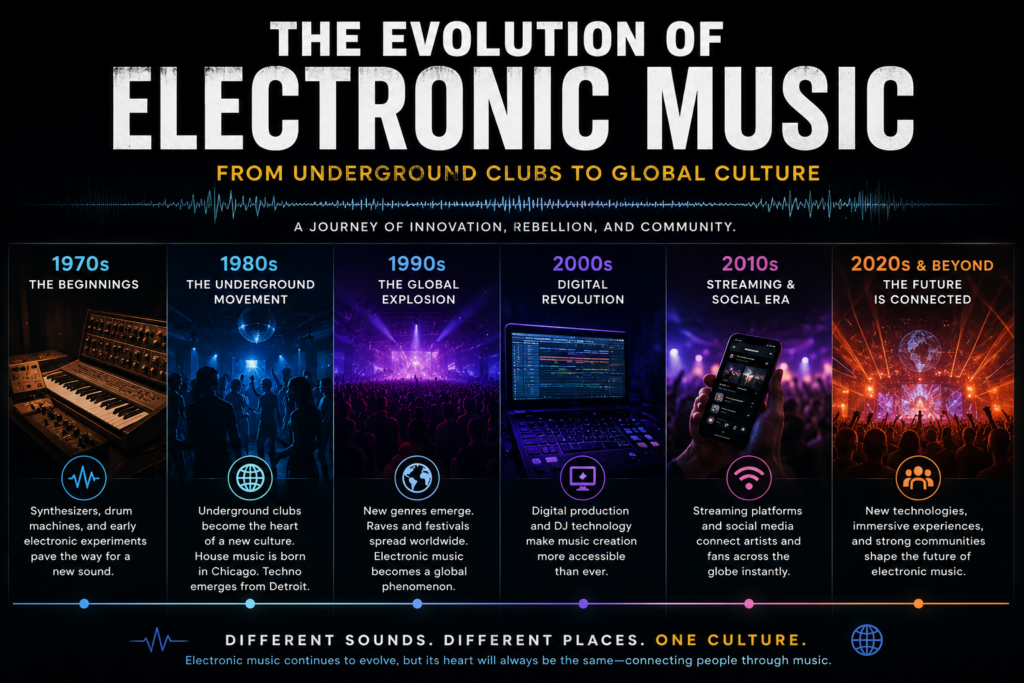
Streaming platforms, music production software, and social media have made electronic music more accessible than ever.
A listener in Delhi can discover a producer from Berlin within seconds.
A DJ in Mumbai can livestream a set watched by people across the world.
An independent artist can release music globally without relying on major record labels.
Technology has reduced barriers while giving local talent greater visibility.
More Than Nightlife
One of the biggest misconceptions about electronic music is that it’s only about clubs.
In reality, electronic music has become part of a much broader creative culture.
It influences:
- Fashion
- Design
- Photography
- Film
- Contemporary art
- Wellness experiences
- Coffee culture
- Food experiences
- Creative communities
Around the world—and increasingly in India—electronic music is becoming part of everyday cultural life rather than something reserved only for weekends.
Community Is the Real Growth Story
The biggest reason electronic music continues to grow isn’t because there are more festivals.
It’s because there are more communities.
People are looking for experiences where they can connect with others who share similar interests.
They want events that feel personal rather than crowded.
They want spaces where discovering new artists is just as exciting as meeting new people.
This sense of belonging has become one of electronic music’s greatest strengths.
A New Generation of Music Communities
Across India, a new wave of independent platforms is helping shape the future of electronic music by putting community at the centre of everything they do.
Instead of simply organizing events, these platforms focus on creating experiences that encourage discovery, support emerging artists, and bring together people who genuinely appreciate electronic music.
Subcultural Music is part of this growing movement. Through curated events, artist broadcasts like THE ISLAND, and community-driven experiences, the platform aims to create spaces where music becomes a reason for people to connect, collaborate, and celebrate creativity.
As more independent initiatives emerge, India’s electronic music ecosystem continues to become richer, more diverse, and more inclusive.
What the Future Looks Like
The future of electronic music in India looks incredibly promising.
As more venues embrace electronic programming, more artists release original music, and more communities organise intimate experiences, the culture will continue to evolve.
Rather than following global trends, India’s electronic music scene is beginning to develop its own identity—one built on diversity, collaboration, and creativity.
The next chapter won’t be defined solely by bigger festivals.
It will be shaped by stronger local communities.
Final Thoughts
Electronic music in India has come a long way.
From the beaches of Goa to underground venues in major cities, it has grown into a movement powered by artists, promoters, venues, and communities who believe music can bring people together.
Today, the scene is more diverse than ever before. New genres are finding audiences, independent artists are gaining recognition, and community-led platforms are redefining how people experience nightlife and culture.
As this movement continues to grow, one thing remains constant: electronic music has always been about connection.
Whether you’re attending your first intimate event, discovering a new artist, or becoming part of a local collective, you’re contributing to a culture that continues to evolve with every shared experience.
Discover More with Subcultural Music
Electronic music is more than what happens on the dance floor—it’s a culture built on discovery, creativity, and community.
At Subcultural Music, we bring that culture to life through curated events, THE ISLAND broadcasts, original stories, and experiences designed for people who genuinely love electronic music.
Explore our latest broadcasts, read more from our journal, and join us at our next event.
Music • Culture • Community
FAQs
Where did electronic music begin in India?
Electronic music gained early popularity in India through Goa during the late 1980s and 1990s, where beach parties introduced international audiences and local listeners to electronic sounds.
Which cities have the biggest electronic music scenes in India?
Delhi, Mumbai, Bengaluru, Goa, Pune, Hyderabad, and Chandigarh all have active electronic music communities, with each city offering its own mix of venues, artists, and events.
Is electronic music in India only about festivals?
No. While festivals have helped popularise the genre, much of India’s electronic music culture thrives through independent collectives, intimate club nights, rooftop sessions, artist showcases, and community-driven events.
How can I discover electronic music events in India?
Follow local venues, independent music collectives, artists, and community platforms such as Subcultural Music, which regularly showcase electronic music through curated events, broadcasts, and cultural experiences.
Why is electronic music becoming more popular in India?
Growing communities, increased access to streaming platforms, rising local talent, independent promoters, and a desire for more meaningful cultural experiences have all contributed to the rapid growth of electronic music across India.