
Consider this your underground electronic music starter guide: it’s not a genre, a tempo, or a specific sound — it’s a way a scene organizes itself, on purpose, to stay small, word-of-mouth, and mostly invisible to anyone not already looking for it. Here’s what that actually looks like and how to find your way in without stepping on anything.
What “Underground” Actually Means
Underground electronic music doesn’t describe a genre — you’ll find underground house, underground techno, underground drum & bass, and underground versions of almost everything else covered on this site. What makes something underground is closer to a set of conditions: small-capacity venues, little or no promotion beyond word-of-mouth and private group chats, artists who prioritize the room over their following, and a general disinterest in — sometimes active hostility toward — mainstream visibility. It’s a description of how music circulates, not what it sounds like.
Where It Happens
Underground scenes gravitate toward spaces that were never designed to be venues: warehouses, basements, industrial units, car parks, sometimes literal fields. That’s partly practical — those spaces are cheap or free and don’t come with a promoter’s cut — and partly aesthetic, since a raw, unfinished room does something to a sound system and a crowd that a polished nightclub can’t replicate. It’s also partly legal gray area: plenty of underground electronic music events operate without the licensing a commercial venue would need, which is a big part of why they don’t advertise widely.
How to Actually Find It
This is the part that trips up newcomers the most: underground events are, almost by design, hard to find if you don’t already know someone. The reliable paths in are the unglamorous ones — following labels and producers you like on social media and Bandcamp, showing up consistently to the handful of smaller clubs and record shops a city’s scene actually runs through, and being visibly, genuinely interested rather than trying to shortcut your way to an invite. Record shops in particular still function as real-world hubs, the same way early scenes grew out of specific rooms and social networks rather than advertising.
The Etiquette Nobody Tells You
Underground spaces run on unwritten rules that matter more than most newcomers realize: no phones out on the dancefloor (many events enforce this with camera stickers), no filming other people without asking, respect the DJ’s focus rather than treating the booth like a photo op, and don’t post locations or addresses publicly, even after the fact. None of this is gatekeeping for its own sake — it’s what keeps a space usable for the next event, and keeps the people who built it willing to keep doing so.
Underground Doesn’t Mean Amateur
It’s a common assumption that underground automatically means lower quality, and it’s usually backwards. Plenty of underground DJs and producers are more technically skilled and more musically adventurous than anyone playing a mainstage, precisely because they’re not building a set for a crowd that needs constant, obvious payoffs. A great set built on unfamiliar records and real risk-taking is far more common in a 200-capacity basement than a 20,000-capacity arena.
Why People Protect It
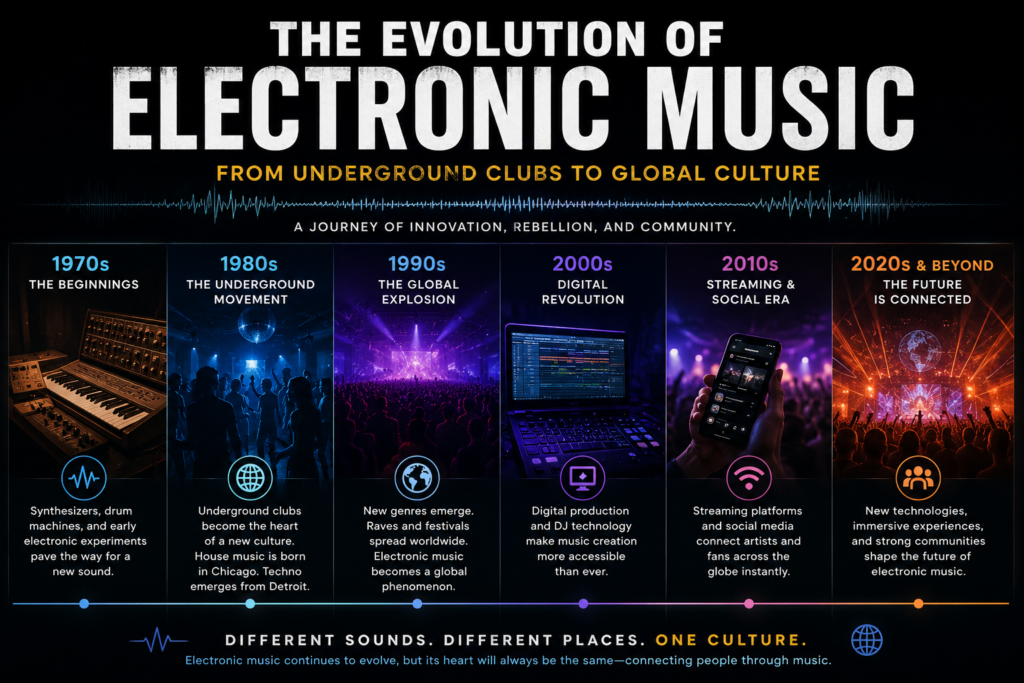
The instinct to keep underground electronic music scenes small and quiet isn’t paranoia — it’s survival. A scene that gets discovered too fast attracts the wrong crowd, the wrong attention from property owners and law enforcement, and eventually the commercial interest that turns a specific room into a brand. Plenty of scenes that are now firmly mainstream — Chicago house, Detroit techno, UK jungle — started underground for exactly these reasons, and plenty of their earliest participants watched that trajectory happen once already and would rather not repeat it.
If you’re trying to place where a specific underground sound fits into the bigger picture, our electronic music genres explained guide covers the tempos and origins behind most of what you’ll hear.
Frequently Asked Questions
Quick answers to the questions this piece raises most often.
What makes music “underground” if it’s not a genre?
It’s about how the music circulates rather than what it sounds like: small venues, word-of-mouth promotion, and a general avoidance of mainstream visibility, regardless of the actual genre being played.
Is underground electronic music illegal?
Not inherently, but plenty of underground events operate in a legal gray area — unlicensed venues, informal ticketing, locations shared only at the last minute — which is part of why they stay quiet rather than advertise.
How do I find underground events if I don’t know anyone in the scene?
Follow local labels, producers, and record shops rather than looking for a public event listing. Showing up consistently to smaller, known venues is usually a faster path in than searching online.
Why can’t I take photos at underground events?
Many underground spaces ban phones and cameras to protect attendees’ privacy, keep the focus on the music rather than documentation, and avoid drawing outside attention to a venue that may not be operating with a full license.
Is underground electronic music lower quality than mainstream EDM?
No — if anything, underground sets tend to take more risks, since the DJ isn’t playing for a crowd that expects constant, obvious payoffs the way a festival mainstage crowd often does.
Do underground scenes ever become mainstream?
Often, yes. Chicago house, Detroit techno, and UK jungle all started as underground, DIY scenes before eventually influencing or becoming part of the mainstream music industry.
What’s the etiquette for a first-time visitor to an underground event?
Keep your phone away, don’t ask around for the next event’s location, respect the DJ booth, and treat it as someone else’s space you’ve been let into rather than a public venue you’re entitled to document.
Is there a difference between “underground” and “indie” electronic music?
Yes. “Indie” usually refers to how music is released — outside major labels — while “underground” refers to how and where it’s performed and consumed. A track can be released independently but still be played at mainstream festivals, or signed to a major label but only ever played in underground clubs.
By The DJs. For The DJs.
Subcultural Music — subculturalmusic.com